


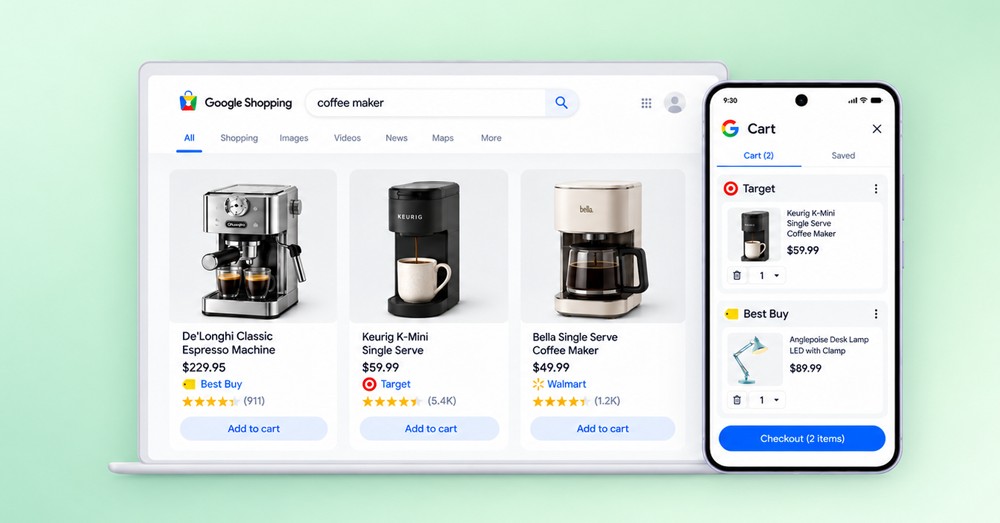
Google has launched Universal Cart in the U.S., allowing shoppers to save products from different retailers in one cart across Google Search and the Gemini app. Items added through AI Mode in Search remain available when the shopper continues in Gemini.
The feature began rolling out on October 15, ahead of the holiday shopping season. Participating retailers include Walmart, Target, Nike, Sephora, Ulta Beauty, Wayfair, and many Shopify merchants.
Universal Cart does more than save products. It can notify shoppers when prices drop or items come back in stock, show relevant promo codes, and suggest payment methods based on card benefits through Google Wallet.
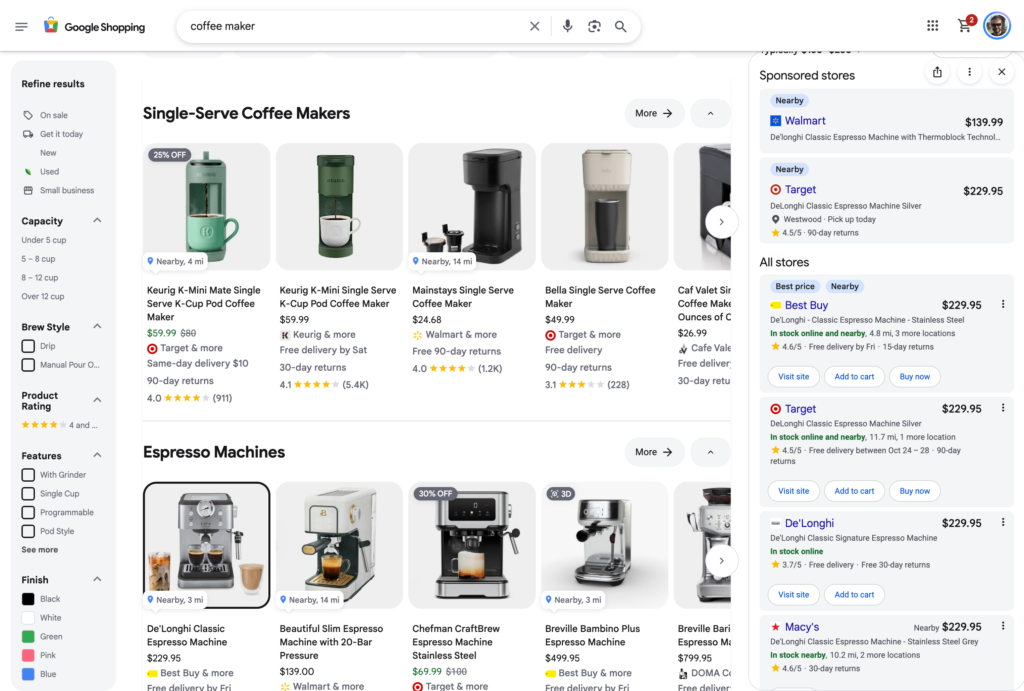
How checkout works depends on the merchant. For participating stores, shoppers can purchase directly within Google using Google Pay. Other purchases transfer to the retailer’s website, where Google helps populate the merchant’s cart. Products are organized by merchant, so a shared cart does not necessarily mean one combined checkout for everything.
The experience uses Universal Commerce Protocol, or UCP, to support checkout. Merchants remain the seller of record and continue handling order confirmations and customer support.
How to Join Google Universal Cart Through Merchant Center
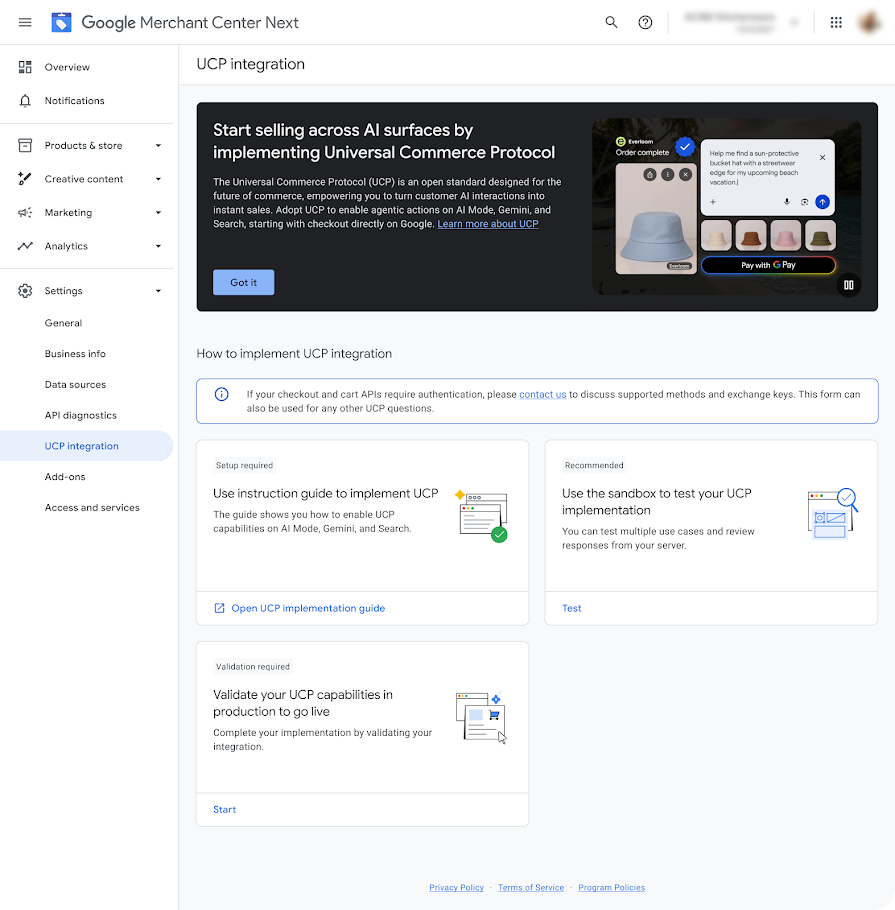
Google is still rolling out access to the UCP integration hub in Merchant Center, so it is not yet available to every seller. To join, merchants need to complete the required UCP technical integration and submit Google’s interest form. Once selected, they can access the hub to test and validate their setup, including transferring carts to their website or enabling checkout directly on Google. Sellers using an ecommerce platform or integration provider should check with that provider about UCP support.
For sellers, the biggest potential change is where customers make their buying decisions. A shopper may discover a product, save it, receive a price alert, and complete a purchase within Google. That could create another path to a sale, while giving sellers fewer opportunities to engage customers on their own websites.
Our takeaway for multichannel sellers is practical: accurate product details, pricing, and inventory should remain a priority. When shoppers compare products from several retailers in one place, outdated availability or inconsistent pricing can make the purchase harder to complete.
Sellers should also review how purchases through Google appear in their order systems and analytics. The shopping experience may start somewhere new, but reliable order processing, fulfillment, and customer service still depend on the merchant.
