





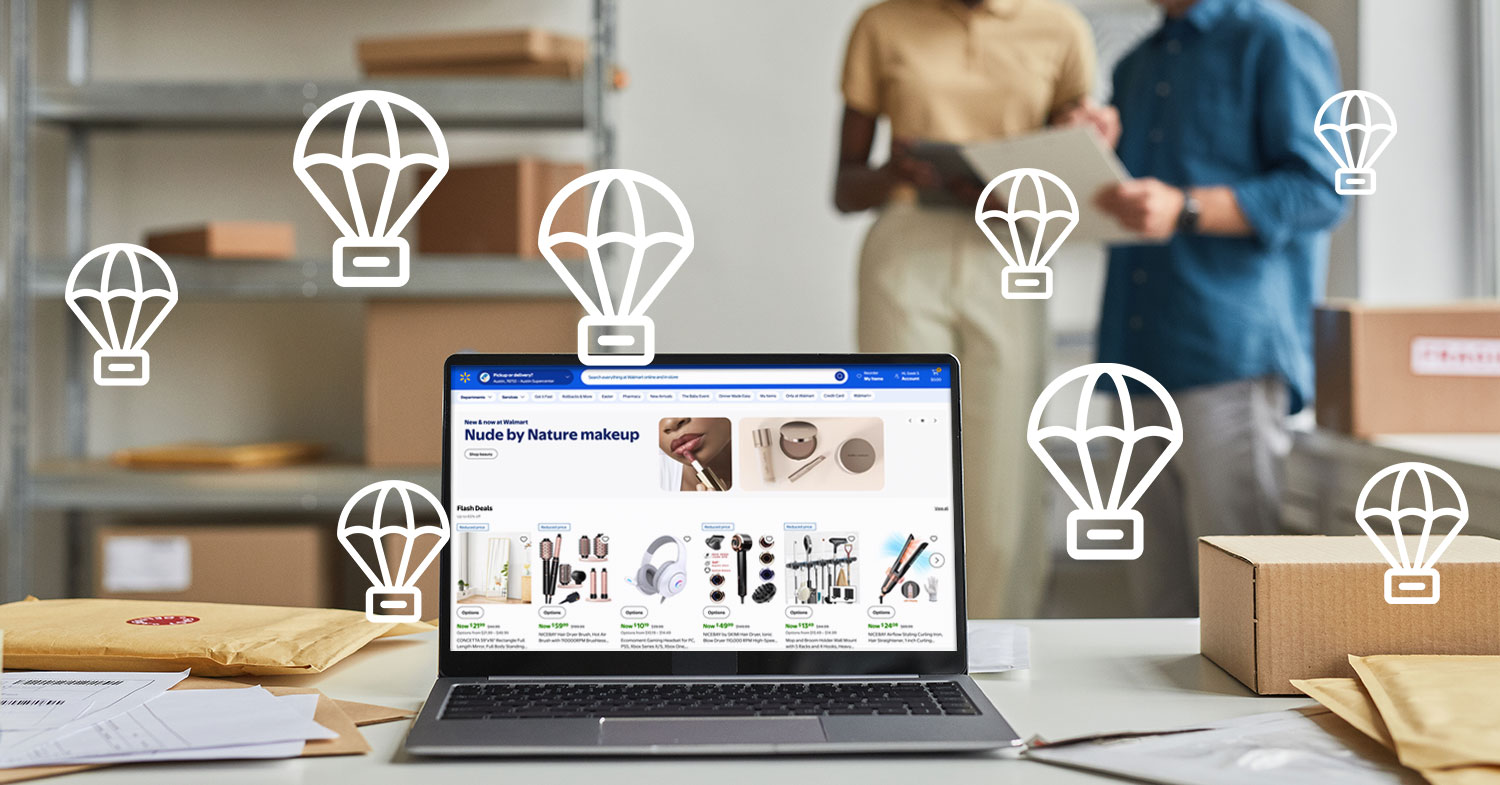
We get this question a lot: Is dropshipping allowed on Walmart Marketplace? Because this comes up so often, we carefully reviewed the Walmart Marketplace program retailer agreement and related policies to understand what is and is not permitted.
Interestingly, the agreement does not explicitly mention the word “dropshipping.” However, the structure of the terms makes it clear how Walmart views seller responsibility, fulfillment, and compliance. Based on that analysis, here is what sellers need to know.
Is Dropshipping Allowed on Walmart Marketplace?
There is no direct ban on dropshipping in the agreement. That said, Walmart places full responsibility on the seller. If you use a supplier to ship products on your behalf, you are still the seller of record and remain accountable for everything.
Dropshipping is possible, but only if it fully complies with Walmart’s requirements.
What Walmart actually prohibits
Walmart explicitly states that you cannot buy an item from another retailer and have that retailer ship directly to the customer. Examples would be:
- Walmart order comes in
- You buy the item from Amazon, Target, Home Depot, etc.
- Amazon ships it to the Walmart customer
That is prohibited. Walmart specifically calls this “retail arbitrage.”
You Must Have the Legal Right to Sell the Product
Walmart requires that you be an authorized reseller, purchase from an authorized reseller, or otherwise have the legal right to sell the product.
This means you cannot list products from questionable sources. If you are dropshipping, your supplier must be legitimate, and you must be able to demonstrate proper sourcing if requested.
You Are Fully Responsible for Fulfillment
Even if a third party ships the product, Walmart considers you the seller of record. That means you are responsible for:
- Shipping on time
- Accurate inventory feeds
- Customer service
- Returns and refunds
- Compliance with all marketplace rules
If your supplier makes a mistake, it is still your liability.
Packaging and Branding Restrictions
Walmart’s agreement restricts including marketing materials or redirecting customers to other sales channels.
If a dropship supplier includes their own invoices, promotional inserts, or branding inside the package, this can create compliance issues. Sellers must ensure neutral packaging and control over the customer experience.

Authenticity and Product Compliance
All products must be authentic, not counterfeit, and compliant with applicable laws. Sellers must maintain processes to ensure product authenticity.
For dropshipping, this means properly vetting suppliers and being able to provide documentation if requested.
Authorized Sourcing and Documentation
One of the biggest misconceptions about Walmart dropshipping is that simply finding a supplier is enough. In reality, Walmart may request proof that your products are sourced from legitimate, authorized sources. Sellers should be prepared to provide supplier invoices, brand authorization letters, business documentation, and other records that demonstrate a compliant supply chain.
In some cases, Walmart may also request photos of your operations as part of an account review. This can include warehouse photos, inventory storage locations, packaging areas, or other evidence showing that your business and fulfillment process are legitimate. If you work with a dropshipping supplier, they should be able to provide supporting documentation, facility photos, and proof of their inventory and fulfillment capabilities.
For this reason, it is important to partner only with reputable suppliers that can provide invoices, authorization documents, warehouse information, and other records if requested. A supplier that cannot verify the origin of products or how orders are fulfilled can pose significant compliance risks to your Walmart Marketplace account.
Shipping and U.S. Compliance Requirements
Products must be legally sold and shipped in all U.S. states. Shipping must meet Walmart’s timing and performance standards.
International dropshipping models may introduce additional risks related to delays, customs, and compliance. Performance metrics matter, and repeated issues can lead to suspension or withheld payments.

When Dropshipping Can Work on Walmart Marketplace
Dropshipping can operate within Walmart’s framework if:
- You have proper authorization to sell the products
- Your supplier ships without marketing materials or branding
- Inventory feeds are accurate and updated
- You meet shipping performance standards
- You properly manage returns and customer service
- Products are authentic and legally compliant
When It Becomes a Problem
Dropshipping becomes risky if:
- You lack authorization to sell the products
- Your supplier ships with promotional inserts or third-party branding
- You cannot control fulfillment performance
- You violate seller performance standards
Final Thoughts
Walmart does not explicitly prohibit dropshipping, but it does require strict seller accountability. The agreement makes it clear that you cannot outsource responsibility.
If you treat your supplier as a logistics partner while maintaining full control over compliance, sourcing, and performance, dropshipping can be aligned with Walmart’s policies. However, the margin for error is limited, and sellers should build processes that prioritize transparency, authorization, and operational control.
