




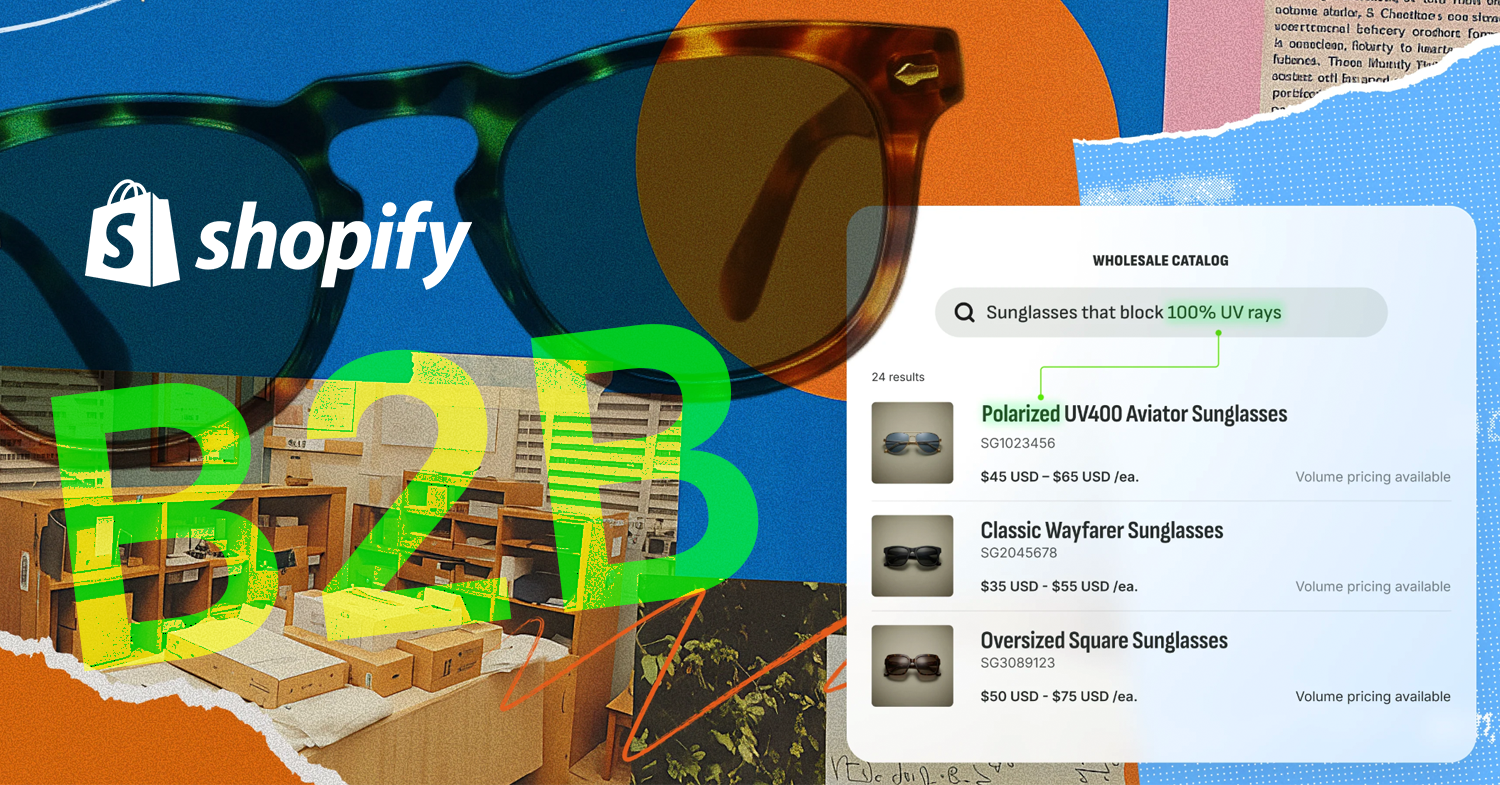
Shopify brings native B2B features to more merchants. This is a meaningful shift for sellers who want to manage both wholesale and DTC in one place without extra tools or custom work. Here is a clear breakdown of what this means and why it matters.
Shopify is making a clear move into B2B ecommerce. By bringing native B2B features to more merchants, they are simplifying what used to require multiple tools and complex setups. For sellers looking to grow into wholesale, Shopify is becoming a practical and increasingly powerful option.
What is B2B ecommerce
B2B (business-to-business) ecommerce is when businesses sell products to other businesses instead of individual consumers.
Typical examples:
- a brand selling in bulk to retailers
- a manufacturer supplying distributors
- a wholesaler selling to small shops
B2B usually requires:
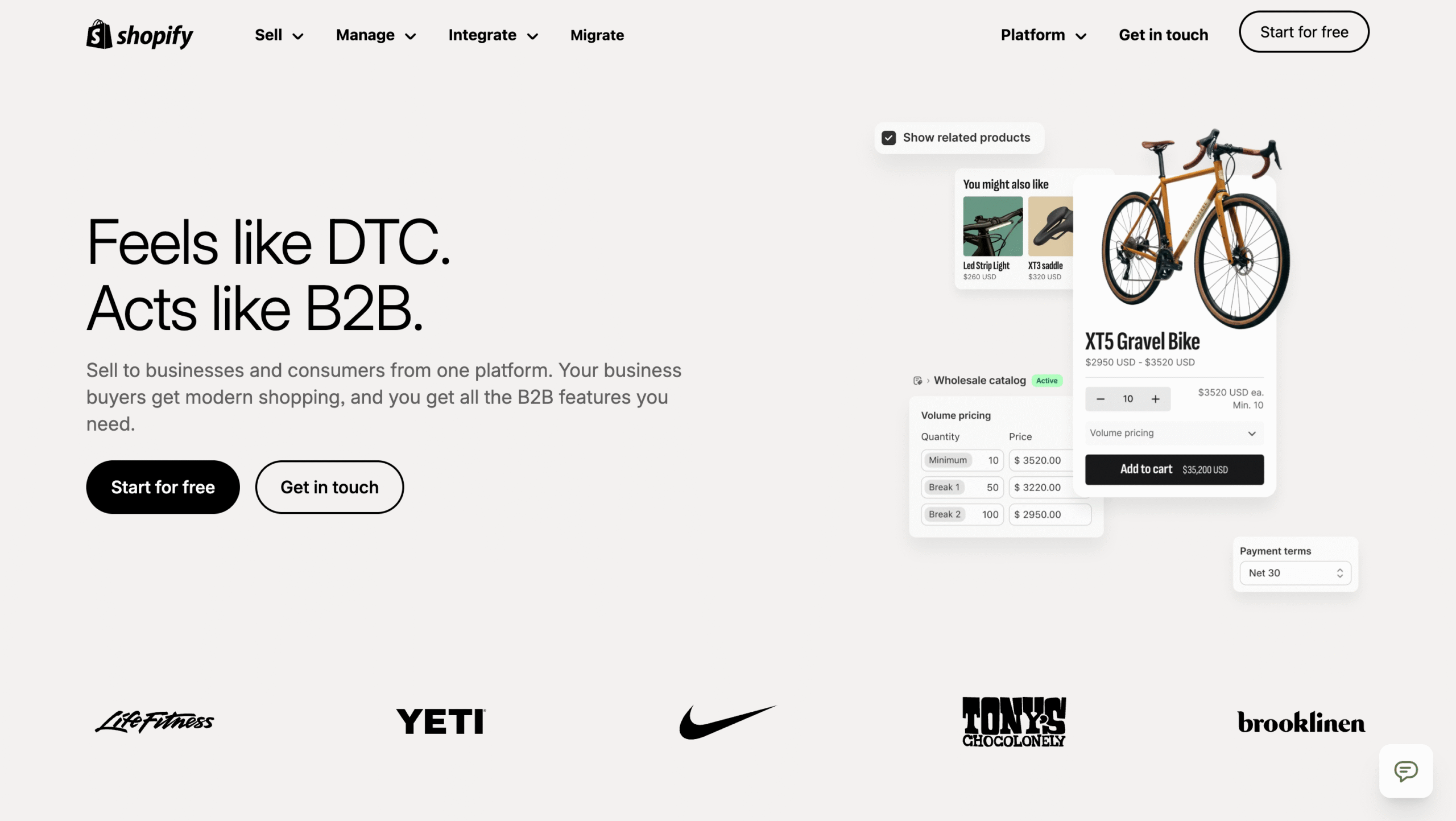
- custom pricing per customer
- minimum order quantities
- bulk discounts
- payment terms like net 30
- company-based accounts with multiple buyers
This is very different from DTC (direct-to-consumer), where pricing and checkout are simple and standardized.
What Shopify announced
Shopify is expanding its native B2B functionality to more merchants across its plans.
Previously, many of these features were limited to higher-tier plans or required apps and workarounds. Now Shopify is moving toward making B2B a core part of the platform.
Key idea:
B2B is built into Shopify, not bolted on.
Merchants can run B2B and DTC from a single store, with shared infrastructure but different experiences for each type of customer.
Key B2B features on Shopify
- Company profiles and accounts
Merchants can create company profiles with multiple buyers, roles, and permissions. This is essential for real B2B operations where teams place orders. - Custom pricing and catalogs
You can assign specific price lists and product catalogs to different companies. This allows personalized wholesale pricing without duplicating products. - Quantity rules and volume discounts
Set minimum order quantities, increments, and tiered pricing. This is standard in wholesale but often hard to implement in DTC-focused platforms. - Net payment terms
Support for payment terms like net 15, net 30, etc. Buyers can place orders without immediate payment, which is critical for B2B relationships. - Self-serve ordering
B2B customers can log in, view their pricing, and place orders without manual intervention. This reduces back-and-forth emails and manual processing. - Draft orders and reordering
Buyers can easily reorder previous purchases, which improves retention and speeds up the buying process. - Integrated checkout and backend
Everything runs through the same Shopify backend, including Shopify Payments, orders, and reporting.
See all Shopify B2B features here.
ERP and system integrations
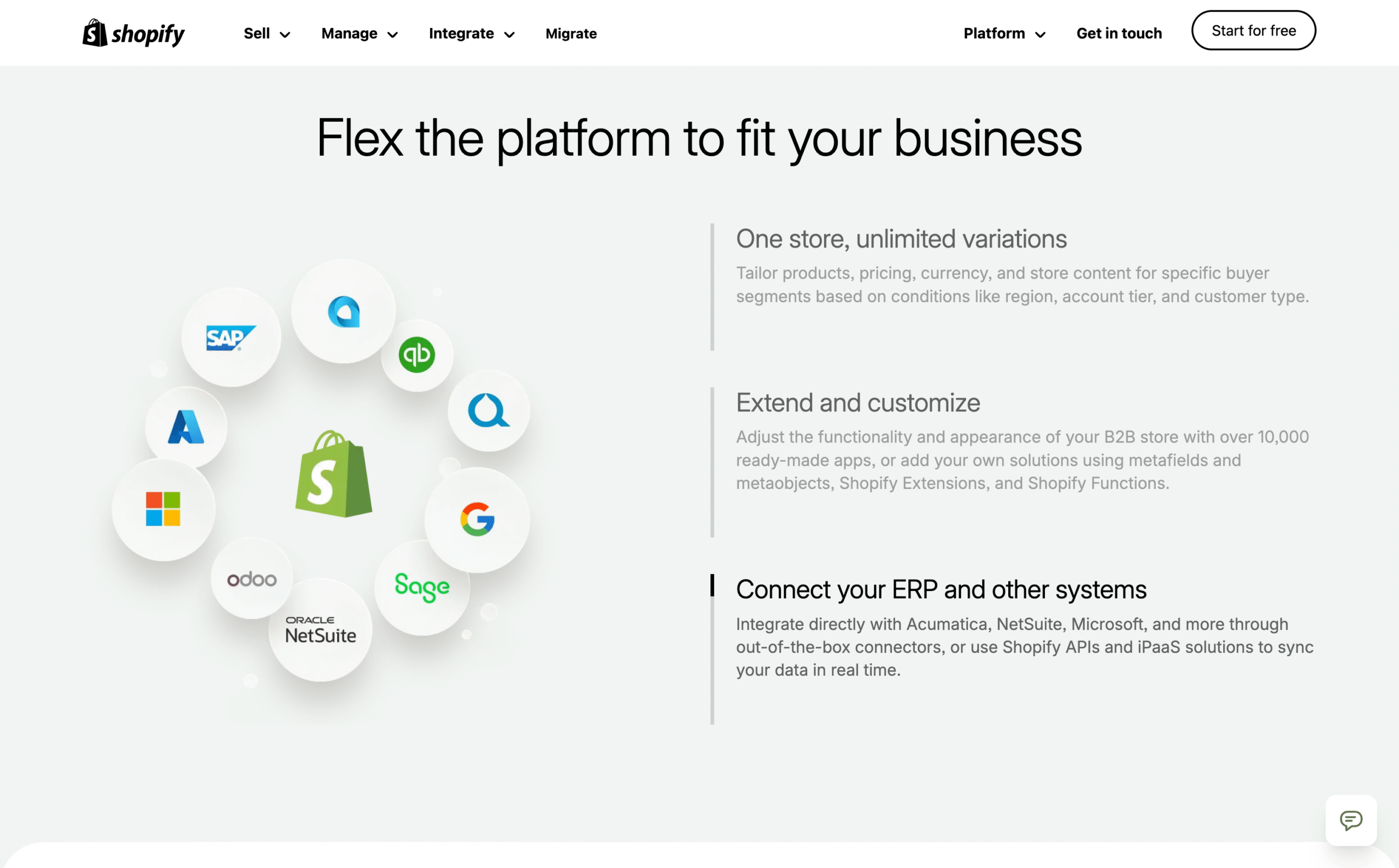
Another important B2B capability on Shopify is integration with ERP and external systems.
Examples of ERP systems that can integrate with Shopify:
- Acumatica
- NetSuite
- Microsoft Dynamics 365
- SAP (including SAP Business One and S/4HANA)
- Oracle ERP
- Odoo
- Infor
- Sage (Sage 100, Sage 300, Sage Intacct)
These integrations are typically done through native connectors, middleware (iPaaS), or custom API setups, depending on the complexity of the business.
Why this matters
- One platform instead of multiple systems
Many merchants previously used separate systems for B2B and DTC. This created complexity, data inconsistencies, and manual work. - Less reliance on apps and custom builds
Shopify is reducing the need for patchwork solutions. This makes setups faster and more stable. - Better buyer experience
B2B buyers now get a modern, self-service experience similar to DTC, but with the complexity they need. - Scalability
As a business grows from DTC into wholesale, Shopify can now support that transition without switching platforms.
Real impact for merchants
According to Shopify, merchants using B2B features are seeing:
- more self-serve orders
- reduced manual work in back-office operations
- faster order processing
- improved reorder rates
This aligns with a broader trend: B2B buyers expect the same convenience as consumer ecommerce.
Why Shopify is becoming a strong B2B platform
Shopify has traditionally been known for DTC. That is changing.
With these updates, Shopify is positioning itself as:
- a unified commerce platform for both B2C and B2B
- a simpler alternative to complex enterprise systems
- a scalable solution for growing brands entering wholesale
For many merchants, this removes a key limitation that previously pushed them to other platforms.

What this means for GeekSeller users
For sellers using GeekSeller with Shopify, this opens new opportunities:
- manage wholesale and marketplace operations together
- expand into B2B without changing core infrastructure
- sync inventory and orders across Shopify, Walmart, Amazon, and more
As Shopify strengthens its B2B capabilities, it becomes a more complete hub for multichannel sellers.
